
Plum Historical Directory Collection Leads
There is no confirmed stand-alone annual Plum city directory run. The strongest documented digital lead is the University of Pittsburgh Library System's regional Historic Pittsburgh collection. It has 129 described directory items, principally from J. F. Diffenbacher and R. L. Polk & Company. Its core digital publication span is 1815 through 1945, while its on-page date filter reaches 1814 through 1963. Most volumes cover Pittsburgh and Allegheny City, with some nearby-borough and general business material. Search its title, date, creator, and identifier fields, then read the volume title and geographic statement before linking it to Plum.
| Collection | Years | Where Held | Access |
|---|---|---|---|
| Historic Pittsburgh directories, chiefly Diffenbacher and Polk | Core 1815-1945; filter 1814-1963 | University of Pittsburgh consortium collection | Digitized online; confirm each volume's place coverage |
| Regional maps linked by the archive | Individual years vary | Historic Pittsburgh and Detre resources | Catalog and collection access |
| County census, estates, and vital-reference materials | Census 1790-1920; Estates Index 1788-1971; birth/death 1870-1905 | Carnegie Library Pennsylvania Department | Public inspection and research lead |
| Plum Borough Community Library | Detailed historic holdings not published | 445 Center-New Texas Road | Catalog and staff referral |
These are access paths, not promises of a listing. A regional title can be useful for a Plum lead only after its coverage is verified. The scans come through four regional contributors, so an absent year is a reason to ask the appropriate partner archive about physical holdings or reproduction. Note: Copy the title, publisher, year, and page with every directory entry so the finding can be checked later.
Plum Directory Geography Checks
Plum is an outer Allegheny County borough, not the City of Pittsburgh. A Pittsburgh heading or mailing label may still be relevant, but neither label proves the selected directory includes a Plum street or household. Historic sources can also call the area Plum Township, because the township began in 1788 and Plum became a borough in 1956. Use those terms, plus locality names such as Holiday Park, Renton, Logans Ferry, Plum Creek, and New Texas, when working through catalog results.
This geography is the useful part of the research, not a reason to stretch a source. The collection description does not establish a borough-wide reverse or criss-cross directory for Plum, and no authoritative first or last Plum directory year was found. Confirm the scope of every volume and only use a reverse section if that particular book contains one.
A direct view of the Historic Pittsburgh city-directory collection is the place to begin a coverage check.
The collection screen is a regional catalog starting point. It does not convert Pittsburgh coverage into confirmed Plum coverage.
Read a Plum Directory Listing
A directory entry is a dated listing, not a complete household record. The Historic Pittsburgh collection confirms personal and business names with addresses, but it does not publish an actual Plum entry or one universal abbreviation key. Inspect the selected volume instead of assuming that it includes a spouse, occupation, status mark, or street-order section. Start in the alphabetical names, then check for an address or street section only where the book supplies one.
| Name or business | Copy the indexed surname, given name, or business spelling exactly. |
|---|---|
| Street address | Record the house number and street as printed, including abbreviations. |
| Conditional details | Inspect for a spouse notation, occupation, boarder, widow, or other status mark only if present. |
| Abbreviation key | Find the key in that volume before expanding a mark. |
| Citation | Keep the title, publisher, year, page, and column for later comparison. |
- Criss-cross directory
- A directory arranged by street address first, then by a listed party. No Plum-specific run was verified.
- Householder index
- An index that may identify the named head of a home, not necessarily all people there.
- Abbreviation key
- The publisher's own explanation of shortened words or status marks, usually near the front or back of a volume.
For a household question, preserve the original wording. A changed spelling, a widow notation, or a new address can be a lead, but it needs corroboration.
Plum Directory Research at Archives
The Thomas & Katherine Detre Library & Archives at the Senator John Heinz History Center is the strongest documented in-person regional route. Its holdings include 700,000 photographs, prints, and negatives; 40,000 books and pamphlets; 3,500 archival collections; 600 periodical titles; and 500 maps and atlases. Library-only visitors enter free. Research hours are Wednesday through Saturday, 10 a.m. to 5 p.m.; appointments are recommended, and the listed telephone number is 412-454-6364.
The Detre Library & Archives can help place a directory search beside maps, yearbooks, family papers, or business records. Its additional resources point to more than 120 Pittsburgh-area directories, but that count still does not prove coverage for a specific Plum address.

Regional archive access is especially useful when a digitized directory title needs a physical companion source or a map check.
The closest local contact is the Plum Borough Community Library, at 445 Center-New Texas Road, 412-798-READ. Its public information confirms catalog access and community service, but it does not publish a list of genealogy subscriptions or historic directory holdings. Ask staff to check catalog terms for Plum, Plum Township, Allegheny County, the locality name, and the target street or subdivision.
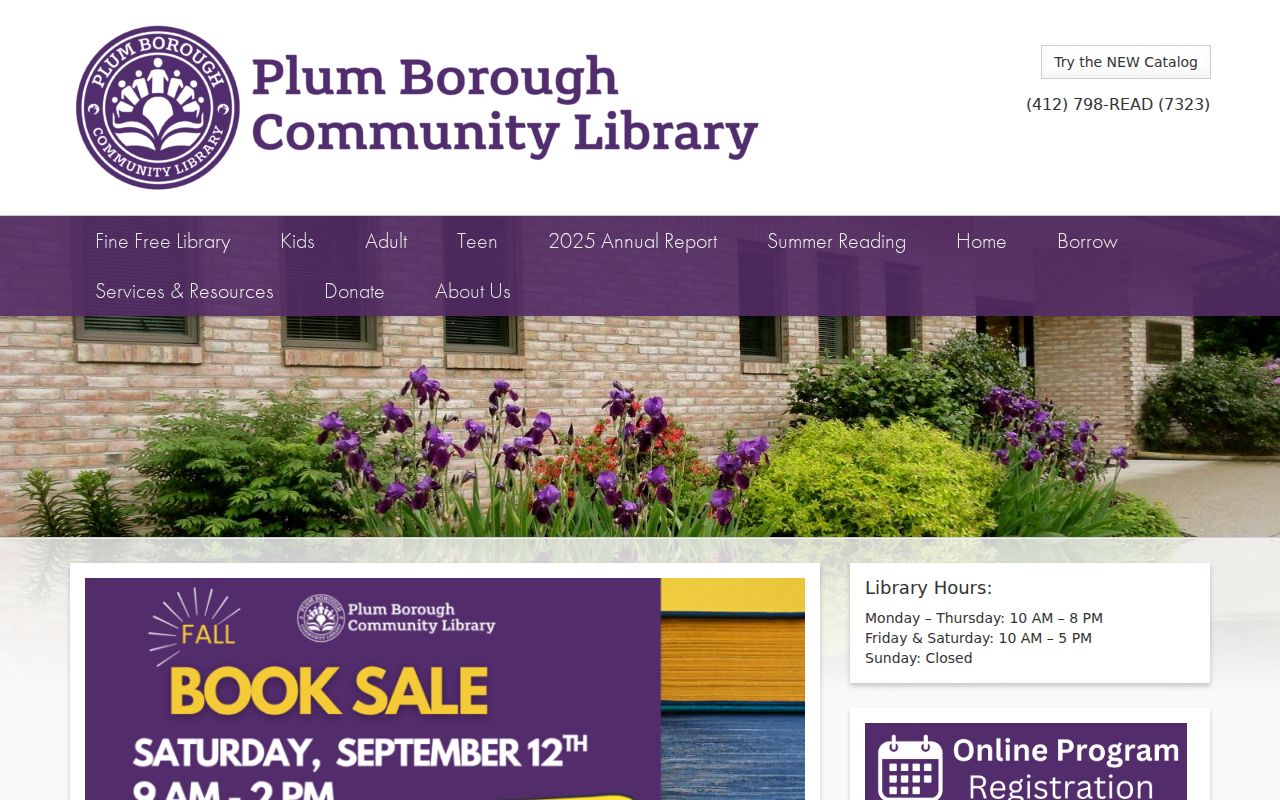
The library is a local referral and catalog point, not confirmation that a particular city-directory volume is on its shelves.
The Pennsylvania State Library's Genealogy and Local History collection adds county and local histories, directories, maps, church and cemetery records, family histories, and newspapers. Staff provide general research help but do not conduct a specific genealogy search. Some materials are on-site only, though libraries may request fiche or selected pages for patrons.
Note: Confirm a catalog entry, access rule, and geographic scope before adding any archive item to a Plum household timeline.
Plum Directory Companion Records
When a directory is thin or misses Plum entirely, Allegheny County's genealogy resources provide stronger era anchors. The county says deeds start in 1789 and estates run from 1789 to date. It identifies the Carnegie Library Pennsylvania Department for its Estates Index, 1788 through 1971, and census microfilm, 1790 through 1920. That department also has local birth and death material from 1870 through 1905.
Use the county genealogy records page to separate a dated directory lead from a property, estate, or census source. A deed can tie a party to a conveyance and legal description. A census captures a household in an enumerated area. Neither source fills every gap left by a directory, but together they make a more careful family-history trail.
Detre's resources also point to Hopkins maps, the Warrantee Atlas, Darlington Digital Library maps, and regional yearbooks. More than 1,200 regional school and college yearbooks span 1888 through 2011, with much of the material before 1960. Availability varies by school and year, so check the catalog before relying on one.
Plum Dated-Name Sources Stay Separate
Some statewide name tools can supply a separate lead, but they are not historical directories. The Pennsylvania Department of Corrections locator concerns state-sentenced people and requires a last name or inmate number. It excludes county custody. A result cannot fill a missing historical household, establish a residence, or substitute for a cataloged directory volume.
The official Pennsylvania DOC locator is shown here only to distinguish custody information from Plum directory research.
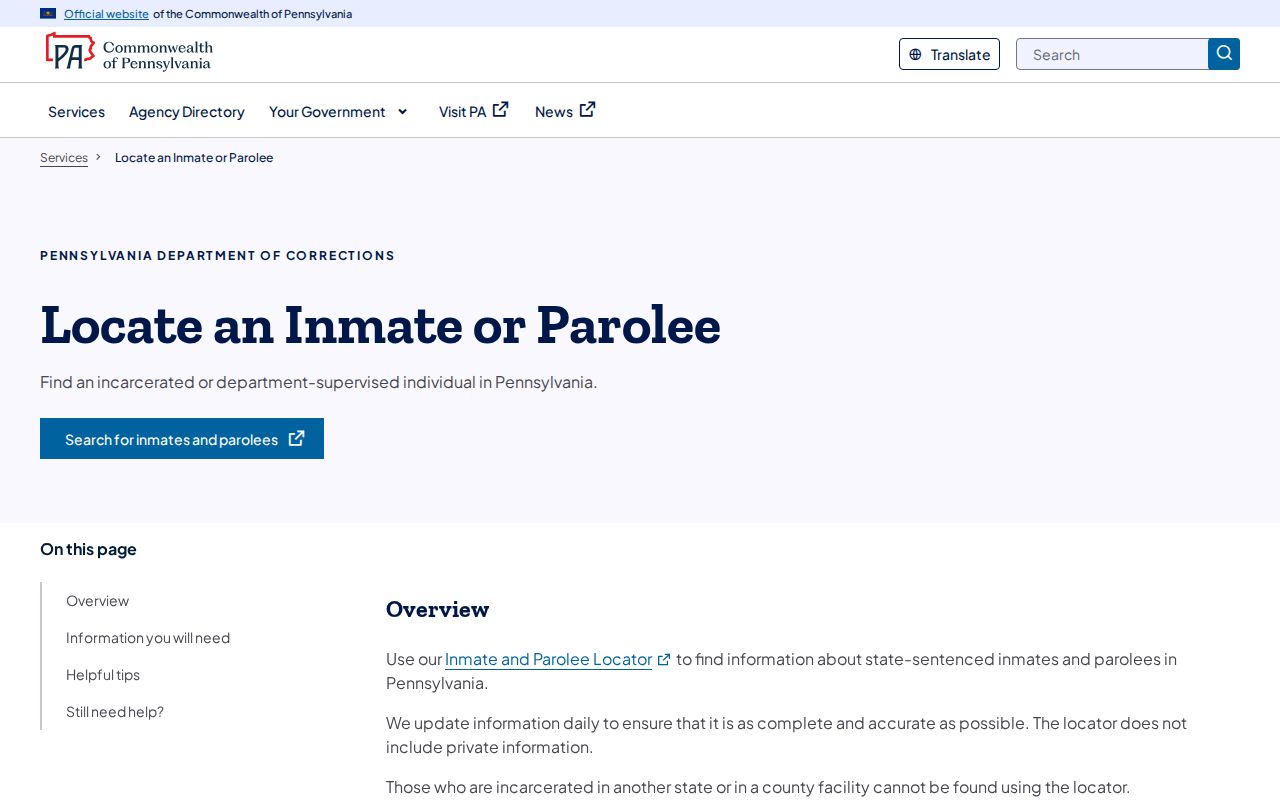
Keep this state tool in its own evidence column and retain the source date rather than treating it as an address record.
Trace Plum Directory Households
For family history, build a timeline rather than a stack of untested names. Begin with a known street address, parcel, or historic locality name. For each volume, write down its coverage statement before making a surname search. Transcribe an entry with its year and page, then compare earlier and later available editions. An absence can mean a move, a spelling variation, a different enumeration method, or a coverage gap.
- Search Historic Pittsburgh by title, date, and creator, then verify that the volume can cover the Plum area or relevant locality.
- Copy the entry exactly, including the title, publisher, year, page, spelling, address, and any abbreviation that the volume defines.
- Check earlier and later available directories and business listings for the same surname, street, or neighborhood term.
- Pair the dated listing with the nearest released federal census or the county's 1790-1920 census microfilm.
- Use deed references, the Estates Index, an obituary source, and a map or plat only where each record supports the connection.
Plum's older records may use Plum Township, a settlement name, or a Pittsburgh postal label. Keep those variants in the timeline. The legal description and parcel history are often steadier than a street name when comparing a rural-era source to a later borough address.
For the modern address-keyed record chain, use the Plum street directory rather than treating historic books as current parcel data.
Plum Directory Leads Need Proof
The Pennsylvania Treasury's unclaimed-property search may provide a dated name and old address lead. It is an official claim service, yet it does not prove that two people are related or that a person lived at an address. Claim documentation remains necessary. Use it as a prompt to check a directory, deed, census, or estate record with its own citation.
The Pennsylvania Treasury unclaimed-property search is a separate name-based source, not a Plum historical directory.
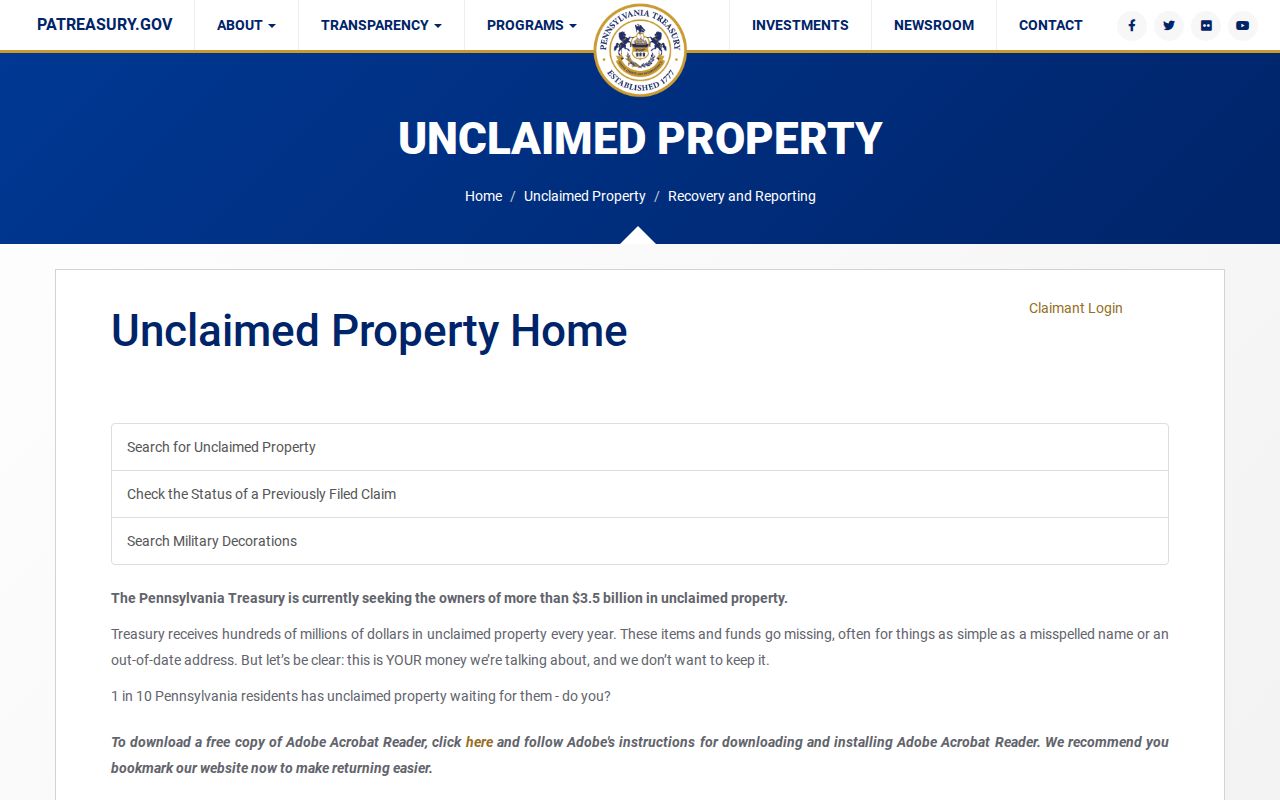
A dated name lead becomes useful only after a collection with known coverage confirms the connection.
Note: When a source does not name Plum or the historic locality, label it as a lead and avoid turning it into a household conclusion.