
Plum Resident Lookup Records
No official record proves that a particular person currently lives in Plum. Each source answers a smaller question. The county assessment record identifies an owner of record and where the tax bill is sent. The individual voter service confirms a registration match. A court docket places a participant in a filed case. Marriage, estate, birth, and death paths provide dated evidence subject to their own rules. A careful resident lookup keeps the source and date with every finding instead of treating a single match as a complete profile.
| Record | What It Confirms | Where | Access |
|---|---|---|---|
| Assessment parcel | Owner of record, tax-mail destination, sale and deed reference | Allegheny Real Estate Portal | Public by address or PIN, not by owner name; no occupancy proof. |
| Voter status | One person’s registration match, party, and polling-place address | PA Voter Services | Individual confirmation, not a street browser. |
| Court docket | Participant, case placement, filing history, and events | Pennsylvania UJS | Public docket categories only; many files stay local or restricted. |
| Marriage and estate | Dated marriage details or estate placement | Allegheny County Court Records | Marriage viewing is open; estate access can vary by file. |
| Birth and death | Life-event corroboration | PA Vital Records and Archives | Eligibility and the 105-year or 50-year public thresholds apply. |
| Entity or license | A documented entity affiliation or public license status | Department of State and PALS | Neither is a personal-address index. |
Start with the record that matches the question. Use a known address for property ownership, the official status form for a voter confirmation, a known case for a docket, and dated county or state records for family-history questions. The entity search accepts a correct entity name or number, not an officer name or address. PALS can show license status and disciplinary action, but it cannot establish a person’s location or identity.
Plum Resident Lookup Address Checks
The Real Estate Portal is useful when the street address or parcel number is already known. Its public form does not search by owner name. A result can show the parcel ID, block and lot, owner, owner mailing address, sale and recording dates, deed book and page, value, tax data, building data, and map views. The mailing field shows where assessment material goes. It may match the property address or may not. Neither field identifies every person who lives at the address.
For a same-name problem, preserve the parcel ID, legal description, and deed reference before comparing another source. Those property identifiers are more reliable than a bare surname. The portal lists the current owner and two prior owners, so a longer ownership history belongs in the county deed records rather than the assessment screen.
Note: A property owner and an assessment mailing destination are record facts, not proof of a present Plum residence.
Plum Resident Lookup Voter Status
Pennsylvania’s voter-status service is designed for a single confirmation. Allegheny County says a full name or PennDOT driver’s-license or ID route can locate a status record. After a match, the county says party affiliation and polling-place address are displayed. The state also offers the county election office and 1-877-VOTESPA as contact paths. It is not an address list, and an inactive or missing result is not proof that someone left Plum.
| Field or route | How the official service describes it |
|---|---|
| Full Name | Required for the name route. |
| PennDOT Driver’s License or ID | Alternative official confirmation route. |
| Submit / find status | A match displays party affiliation and polling-place address. |
| County Elections or 1-877-VOTESPA | Contact alternatives published by the state. |
The Allegheny County voter-registration page shows the official local route for a Plum resident lookup.
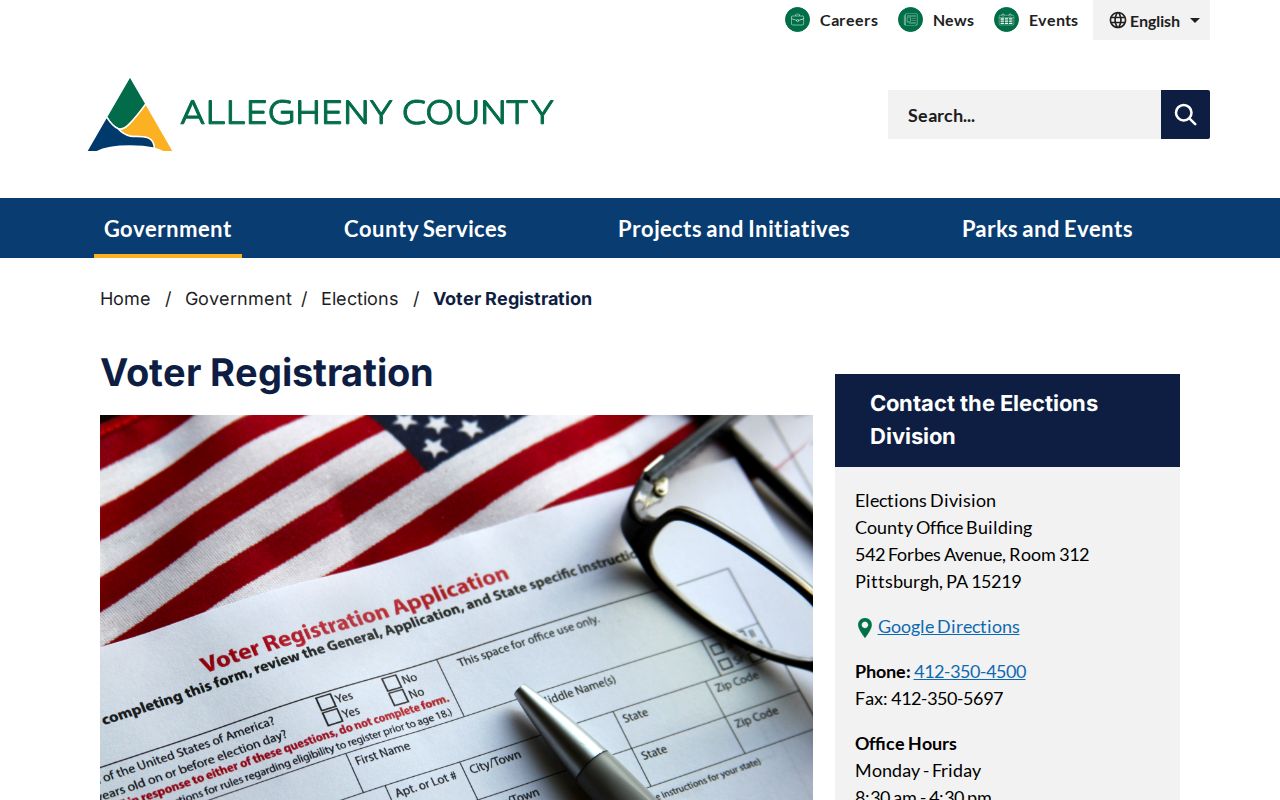
Use the image as a reminder to confirm one matching record through the county and state process, not as a way to compile a list of people.
Plum Resident Lookup Court Dockets
The public UJS service covers criminal Common Pleas, Magisterial District, appellate, and Philadelphia Municipal Court docket sheets. For a Plum name search, select a participant-name route, add the last name, then use Allegheny County, court office, docket type, filing dates, or date of birth when the result offers them. The public service is free, but it is narrower than secure access and the local court file. A docket is evidence of a filed case at a point in time, not proof of a current address or a complete court history.
| UJS search field | Use for an Allegheny search |
|---|---|
| Search By | Choose Participant Name, Docket Number, Date Filed, OTN, SID, or another option that appears for the selected court. |
| Participant Last Name | Required for a name search; add a first name to reduce duplicate results. |
| County and Court Office | Select Allegheny and narrow the court office where useful. |
| Docket Type and Case Status | Limit the category and active or closed results where available. |
| Filed or event dates | Use the published date ranges and calendar filters to narrow a known timeframe. |
The official docket guide describes these result items:
- Docket number, court type, case caption, and primary participant.
- Filing date, case status, and date of birth when shown.
- General case information, events, court dates, financial entries, and filings.
- A printable public docket sheet and calendar-event view, subject to browser settings.
The state excludes juvenile, sealed, expunged or pending-expungement, limited-access, destroyed, Common Pleas civil, and sensitive family or adoption material from the public result path. When a docket number is known, the Allegheny Criminal Division keeps current-year plus four prior years of files in Room 220, while older files must be ordered from storage. Court terminals and the counter remain the proper fallback.
The county criminal-records page documents that counter route for a Plum resident lookup.
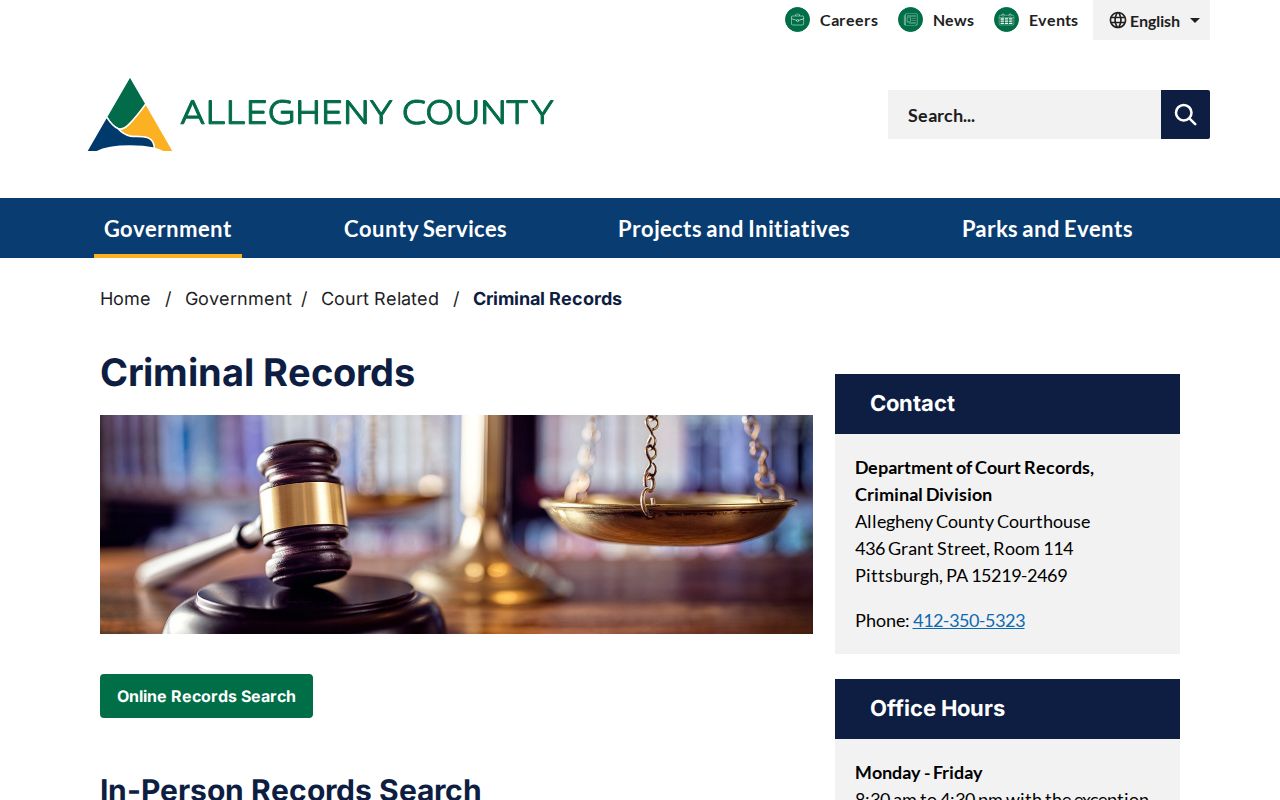
It supports a case-file verification step after an online docket, not a conclusion about where a participant lives.
Verifying a Plum Resident
A reliable verification combines sources that answer different questions. Record full-name variants, initials, prior surnames supported by an authoritative record, and dates before running searches. Do not merge records only because a name and county match. A property deed reference, a dated marriage record, or a case filing date can help separate two people with the same name.
- Use a known address or PIN to identify the assessment parcel, owner of record, mailing destination, and deed reference.
- Confirm an individual voter status only through the official tool, preserving the date of the result.
- Search UJS by participant name and use Allegheny, court type, filing dates, and available birth-date detail to narrow a known case.
- Match dated marriage, estate, or eligible vital-record evidence at its custodian before relying on the identity link.
Three record terms help keep this process precise:
- Docket
- A court’s organized list of a case’s basic information, events, financial entries, and filings.
- Index and image
- An index helps locate a record; an image or filed copy is the underlying document and may have separate access rules.
- Certified copy
- A custodian-issued copy for an authorized purpose, distinct from an informational or archival copy.
Plum Resident Lookup Vital Records
Allegheny County marriage licenses issued from 1885 to the present are open for viewing. The county’s online search and order path serves 1996-forward licenses; earlier requests can be ordered online, but a search fee applies even if no record is found. Each request needs one spouse’s complete name and the marriage year. Historic applications can include full names, age, residence, occupation, birthplace, and, from 1915, parents’ details. The county lists a $4 plain copy and a $4 unsuccessful-search fee.
The Pennsylvania birth-certificate service explains the application and eligibility path for a current certified record.
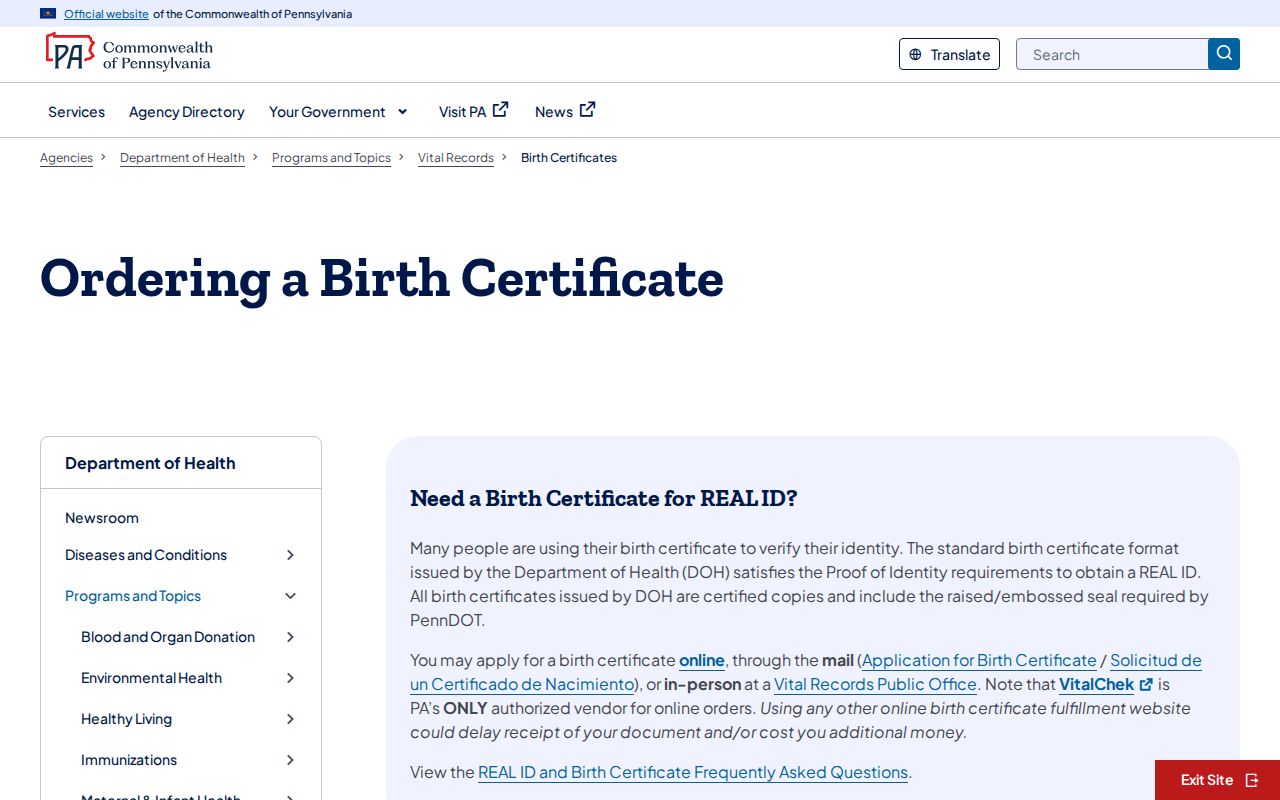
Current birth records require an eligible relationship or legal authority; they are not a general name-search resource.
Plum Resident Lookup Birth History
The Department of Health genealogy route explains the public-history split for older records.
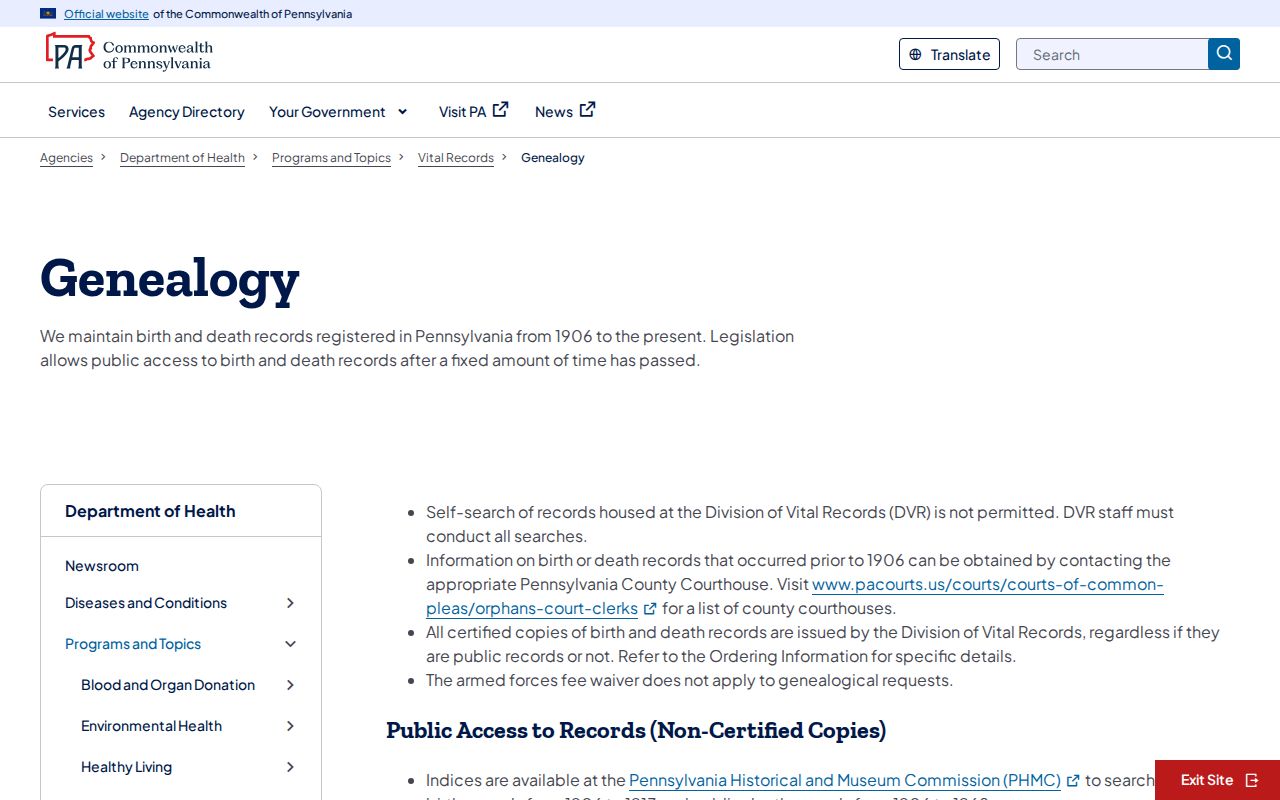
Original birth records become public 105 years after birth. Public birth indexes currently span 1906 through 1913.
Plum Resident Lookup Death Records
The Pennsylvania death-certificate service distinguishes qualified current requests from archival research.
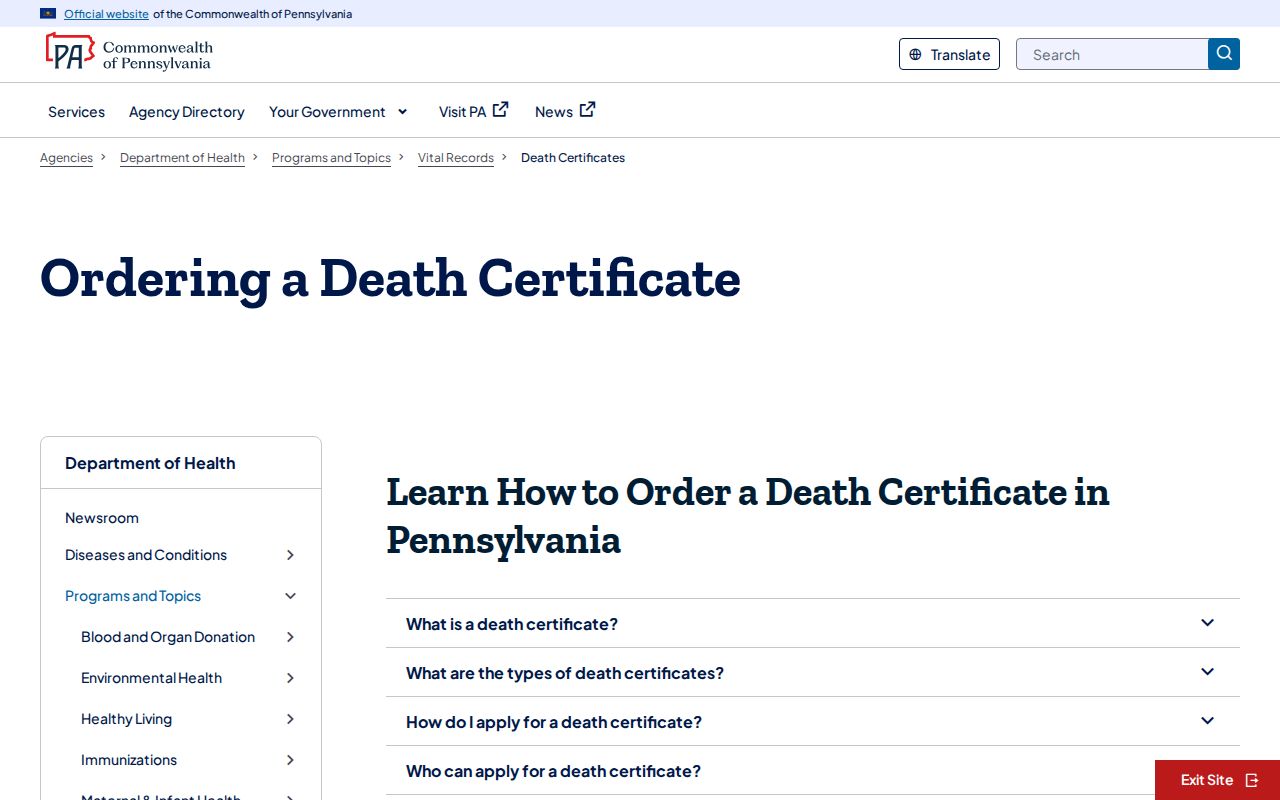
For a death after 2019, the state describes a non-medical-information option, but a current certified request still has eligibility conditions.
The Pennsylvania State Archives death-records page is the public historical route.
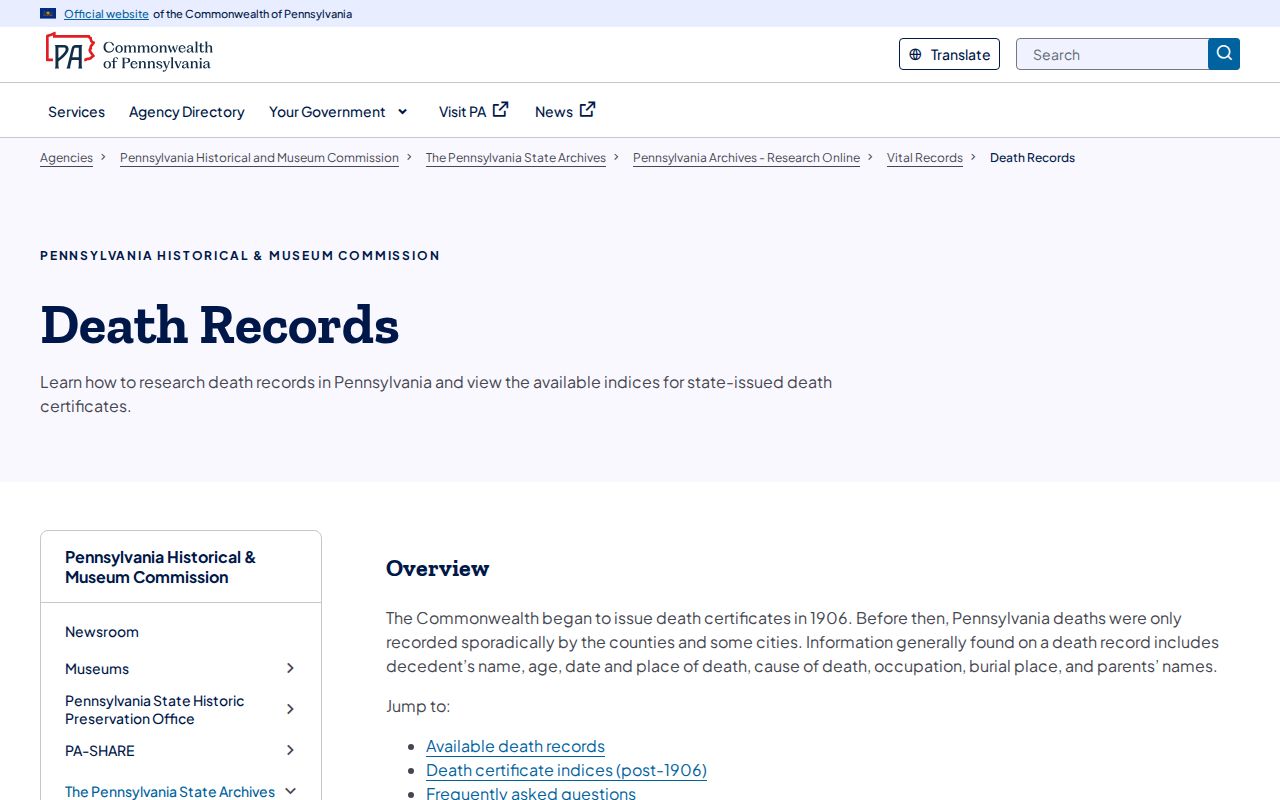
Deaths become public 50 years after death. The Archives holds public death certificates, and its instructions direct a researcher without a certificate number to its mail reference process.
PAIR and Plum Family Questions
For an adult adoptee or birth relative seeking permitted information, Pennsylvania’s PAIR and Act 127 process is the official route. PAIR is a confidential voluntary registry. Adoptees, adoptive parents, and birth relatives may authorize release of identifying information and may submit or obtain social or medical history under consent rules. Signed hard-copy forms are required. Neither a sealed adoption file nor an original birth record becomes an ordinary resident lookup simply because a name search is difficult.
This consent-aware path protects the people involved while giving a family researcher a way to request information lawfully. Estate and marriage records can offer separate historical leads, but they do not override adoption confidentiality.
Correcting a Plum Resident Lookup
Correct the source record with the office that keeps it. The UJS portal provides a correction-request form for a party or that party’s attorney to send to the court where the case was filed. The county property portal directs factual property-data errors to LandHelp@AlleghenyCounty.US. Voter changes belong with the state or county election system, and vital-record amendments follow the Division of Vital Records procedures. A private listing cannot correct a government record.
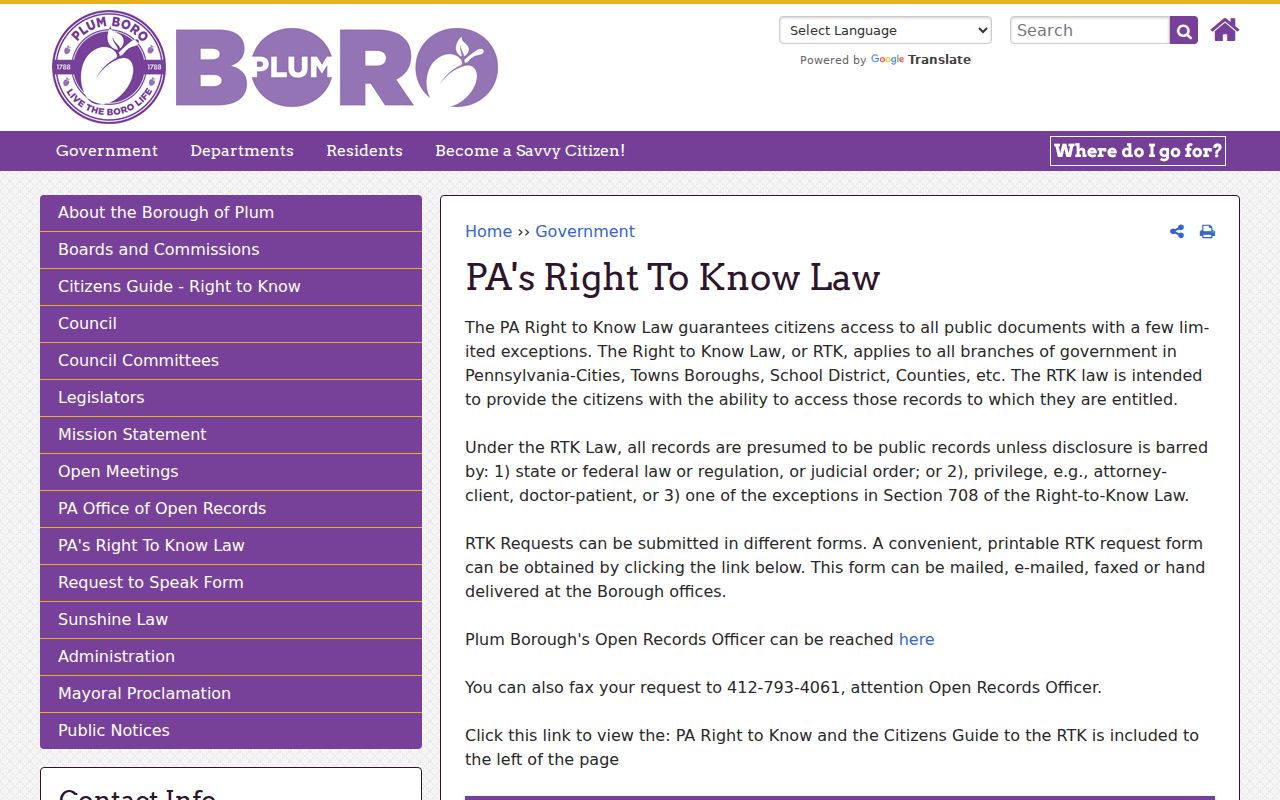
For an existing borough permit, inspection, zoning, code, or municipal record, use Plum’s Right-to-Know route. Pennsylvania’s Right-to-Know Law is Act 3 of 2008. Plum accepts a request by mail, email, fax, or hand delivery. Identify the existing record, address, date range, and desired copy or inspection format rather than asking the Borough to answer a broad question.
The Borough’s Right-to-Know page supplies that local records-request channel.
A request can produce a record that exists and is disclosable. It does not expand access to protected personal information.
Plum Resident Lookup Privacy
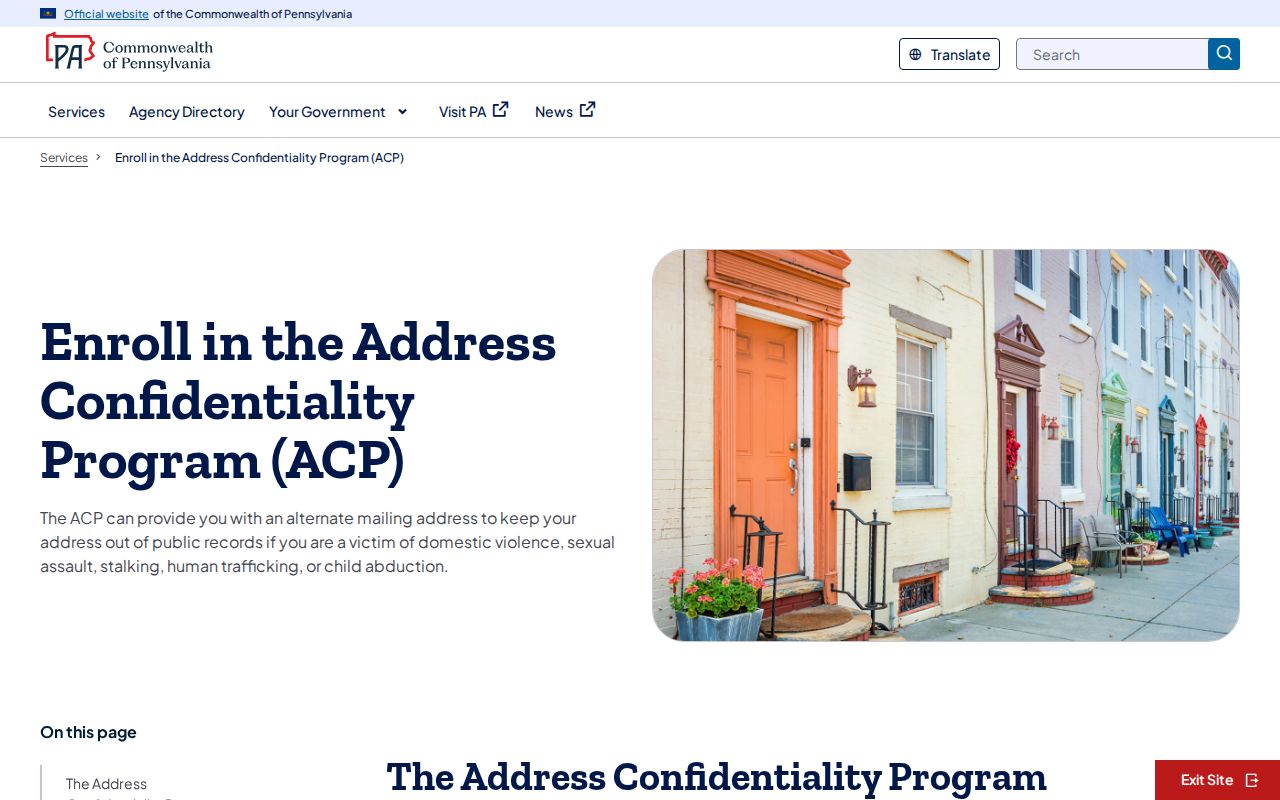
Pennsylvania’s Address Confidentiality Program, administered by the Office of Victim Advocate under 23 Pa.C.S. §§ 6701 et seq., lets eligible survivors use a substitute mailing address in government and court records, voter registration, vehicle records, school records, and marriage licenses. A nonmatching address can therefore be lawful, not an error. The program is part of a safety plan, enrollment can occur with a local victim-service agency or online, and participants renew every three years.
The Pennsylvania Address Confidentiality Program describes this substitute-address protection.
DMV information is separately protected by the federal Driver’s Privacy Protection Act, and voter-list products have specific use and nonpublication restrictions.
Lawful use. A Plum resident lookup is for personal, lawful research such as family history, estate questions, or verifying a record. Stalking and harassment are crimes under 18 Pa.C.S. §§ 2709.1 and 2709.